


A detailed RFQ should cover product application, pouch style, dimensions, material structure, thickness, printing, order quantity, equipment requirements, testing standards, and delivery conditions.
The following checklist covers the information a flexible packaging manufacturer needs to assess feasibility, calculate costs and identify specifications that still require confirmation.
1. Product Application and Packaging Purpose
The first thing buyers should explain is what product the packaging will contain and how the package will be used.
Different food products have different packaging requirements. A package designed for dry snacks may not be suitable for frozen food, liquid products, or oily ingredients.
When preparing an RFQ, include:
-Product name and category
-Product weight or filling volume
-Product form, bulk density (where relevant), oil content and sharp edges
-Storage temperature, filling temperature and any freezing, pasteurization or retort process
-Required shelf life
-Protection requirements, such as moisture, oxygen, or light barriers
For powders and granular products, include bulk density if available: two products with the same net weight may require different pouch volumes.
Dry snacks often need moisture protection to retain crispness. Coffee may require oxygen and aroma protection, while frozen foods need a structure that remains suitable at the intended storage temperature.
2. Pouch Style and Packaging Format
The pouch style affects packaging appearance, capacity, functionality, and production requirements. Buyers should identify their preferred packaging format or provide a reference image if the exact style is not known.
Common flexible packaging formats include:
-Stand-up pouches: Suitable for snacks, dried fruit, nuts, and many other food products.
-Three-side seal pouches: A flat format for single portions or products that do not require a standing base.
-Flat bottom bags: Offer a stable base and a structured appearance for retail display.
-Quad seal bags: Commonly used for coffee, pet food, and other products requiring a larger packaging format.
-Spout pouches: Suitable for sauces, beverages, and other liquid or semi-liquid products.
-Rollstock film: Used with automatic filling and packaging equipment.
Buyers should specify optional features such as zippers, tear notches, hang holes, windows, handles, spouts or coffee degassing valves, including their positions and dimensions where relevant.
If buyers are unsure about the best pouch style, providing the product type, filling weight, and preferred appearance can help the supplier recommend suitable options.
For example, a snack brand that needs its packaging to stand upright on supermarket shelves and remain resealable after opening may consider a stand-up pouch with zipper rather than a standard flat pouch.
3. Packaging Dimensions and Capacity
Accurate dimensions are essential for preparing a reliable quotation and determining whether the packaging can accommodate the product.
For pre-made pouches, buyers should provide:
-Bag width
-Bag height or length
-Bottom gusset or side gusset dimensions, if applicable
-Seal widths, zipper or spout position, and required filling opening
For rollstock film, buyers should provide:
-Film width
-Roll diameter
-Core inner diameter and any maximum roll weight
-Roll length or weight, if specified
-Winding direction
State dimensions in millimetres and clarify whether they refer to external or usable internal dimensions. For gusseted bags, specify whether the gusset measurement is folded or fully opened.
If an existing package is available, buyers can send a sample or technical drawing for reference. This is particularly useful when replacing an existing supplier or developing a new packaging format.
Confirm usable capacity with the actual product and filling method before approving the final bag dimensions.
4. Material Structure and Barrier Requirements
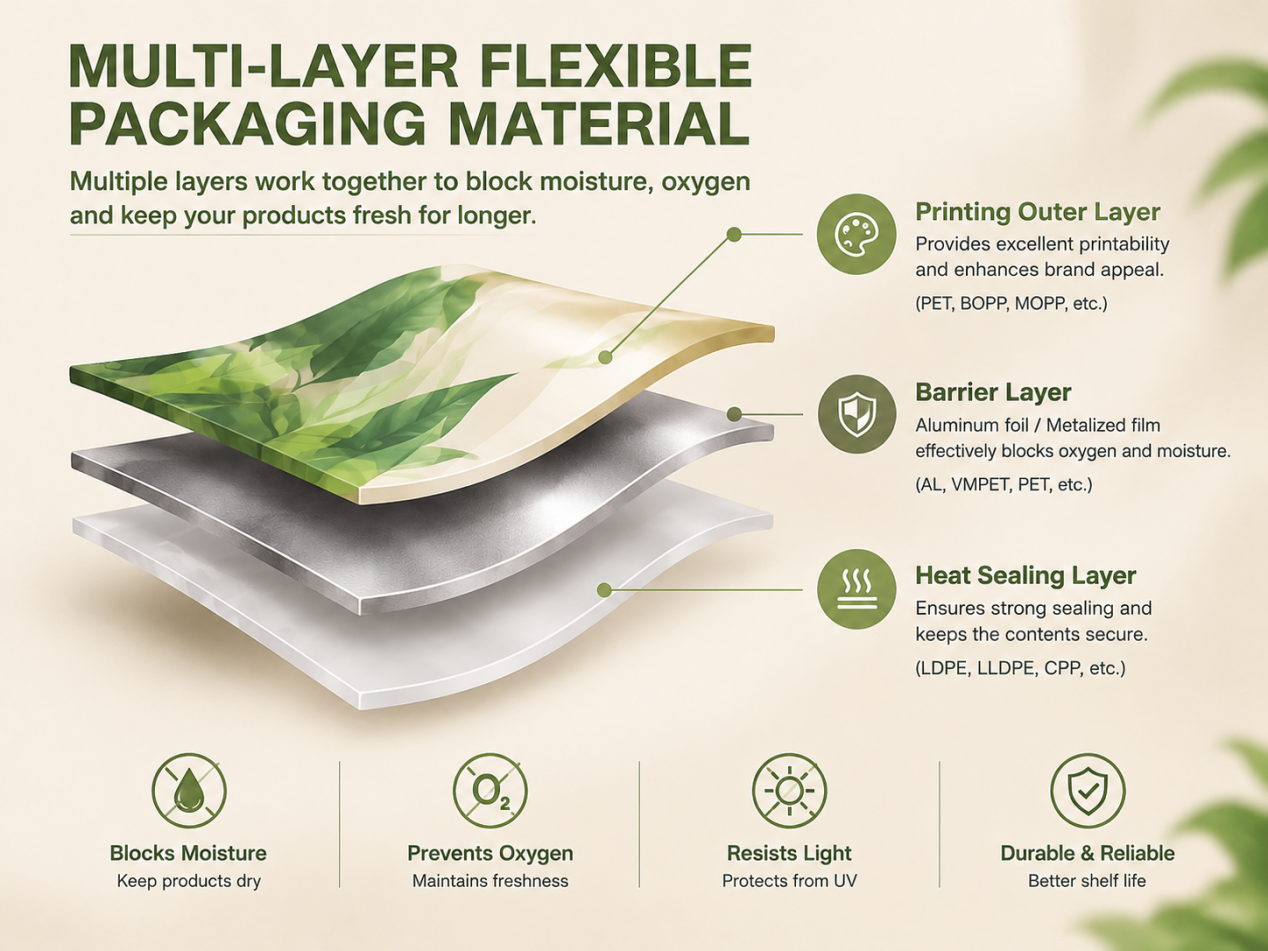
Material selection is one of the most important parts of a flexible packaging RFQ. Different material combinations offer different levels of protection, flexibility, stiffness, printability, and sealing performance.
Common laminate components include PET, BOPP, PE, CPP, nylon (PA), metallized film and aluminium foil. The outer layer, barrier layer and sealant must be selected as a system.
Buyers should specify:
-Preferred material structure, if already confirmed
-Target oxygen transmission rate (OTR) and water vapour transmission rate (WVTR), including test conditions and units, if specified
-Light protection requirements
-Grease or oil resistance
-Required heat-sealing properties
-Storage and transportation conditions
PET/PE may suit applications with moderate barrier needs. PET/VMPET/PE or PET/AL/PE may be considered for products requiring greater oxygen, moisture or light protection. Actual barrier performance depends on the complete laminate and should be verified against the shelf-life target.
If buyers do not know the exact material structure, they can provide the product type, shelf-life target, and protection requirements and ask the supplier for a recommendation.
Application Example: Oily Food Packaging
For an oily food product, a price-only comparison can overlook grease resistance and seal contamination during filling. The RFQ should identify the oil content, filling temperature and expected storage conditions, then specify any required seal or leak tests. This is an illustrative application, not a verified customer outcome.
5. Film Thickness and Performance Requirements
Film thickness affects material consumption, packaging strength, stiffness, and cost. Selecting a thickness that is too low may increase the risk of tearing or puncturing, while unnecessary thickness can increase the total packaging budget.
Buyers should include:
-Required total laminate thickness in micrometres (µm), and individual layer thicknesses if specified
-Thickness tolerance, if applicable
-Expected product weight
-Puncture and tear resistance requirements
-Drop and transportation risks
-Required seal strength
Total thickness alone does not determine performance. For example, a PA-containing laminate may offer better puncture resistance than another structure of similar thickness, depending on the grades and layer distribution.
If buyers have an existing packaging specification, it should be included as a reference. Otherwise, the supplier can review the application and recommend suitable thickness options.
For large-volume orders, it is useful to confirm the proposed material structure and test the packaging before approving mass production. This helps buyers avoid both unnecessary material costs and insufficient packaging protection.
6. Printing Requirements and Artwork
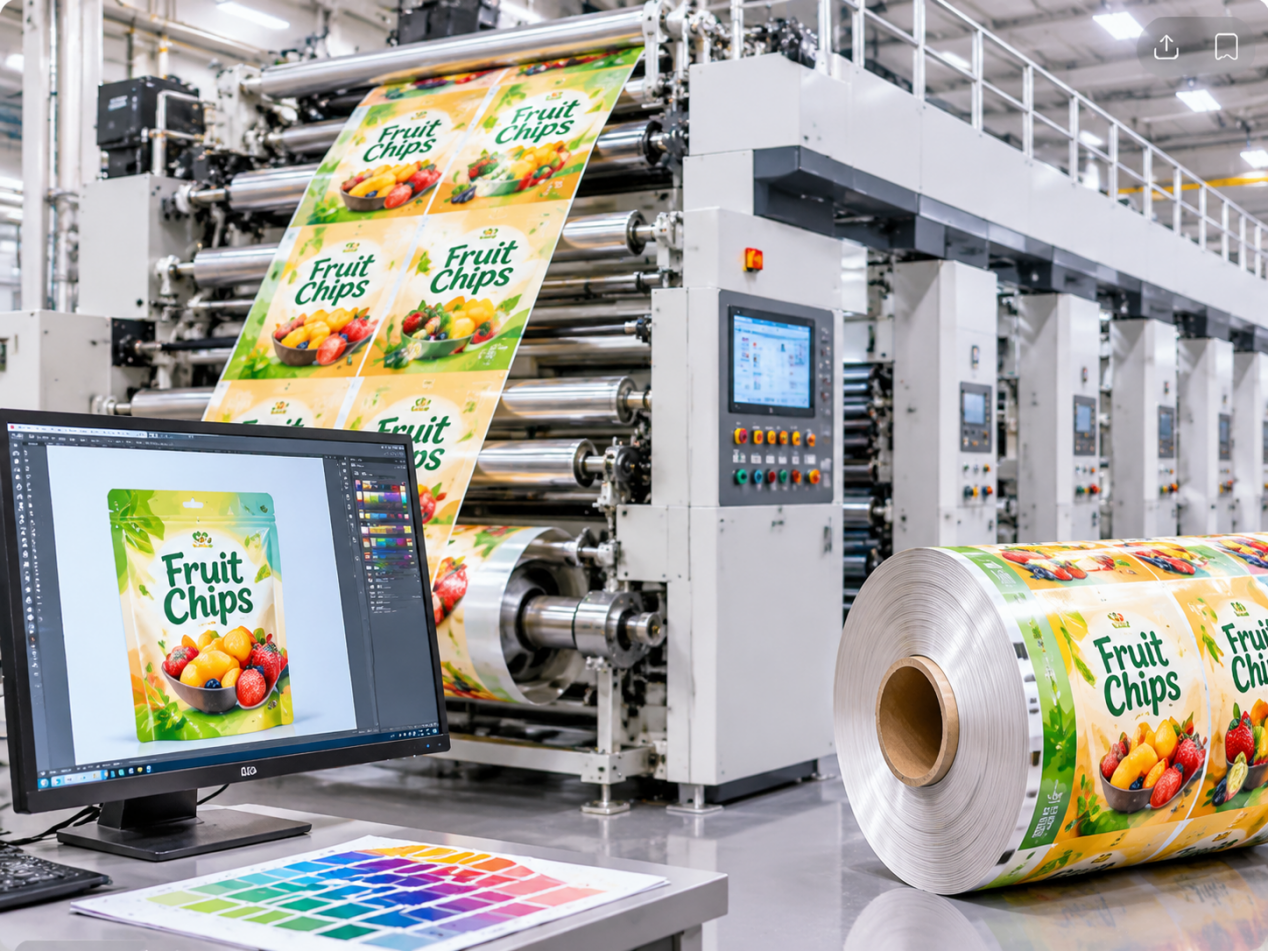
Printing specifications are important for custom flexible packaging. Clear information helps suppliers evaluate production, check artwork, and provide accurate quotations.
When preparing a flexible packaging RFQ, buyers should include:
-Number of printing colors: Specify required colors or provide a reference design.
-Printing method: State any required process, such as rotogravure, and confirm supplier capability and economic order quantities.
-Artwork files: Supply editable artwork or print-ready PDF, dielines and colour references where available.
-Logo and brand guidelines: Include the logo, brand colors, fonts, and design requirements.
-Printing position: Clarify the placement of logos, product information, and patterns.
-Surface finishes: Specify matte, gloss, spot effects, or metallic finishes.
Buyers should also confirm the artwork status. If finalized, provide the complete files for review. If still under development, a reference image or draft can show the expected appearance.
For custom printed packaging, check that artwork dimensions, layout, and printing areas match the selected pouch style or rollstock film. Discuss any required adjustments before production.
Ask whether printing cylinder charges, artwork revisions and proofing costs are included in the quotation or charged separately.
7. Order Quantity and Purchasing Plan
Order quantity directly affects material purchasing, production planning, printing costs, and unit pricing.
A flexible packaging RFQ should include:
-Initial order quantity per size and design, in pieces for pouches or kilograms for rollstock
-Expected annual purchasing volume, if available
-Estimated order frequency
-Number of designs or SKUs
-Whether multiple sizes or products will be ordered
-Expected repeat-order schedule
A total order of 100,000 pouches split across five designs is not necessarily priced like 100,000 identical pouches. Artwork changes, cylinder requirements and production runs can affect the unit cost and minimum order quantity (MOQ).
At HUIYANG PACKAGING, pouches and films are made to order. Pouch MOQ depends on material, thickness, style and dimensions; rollstock orders generally start at 500 kg, subject to project confirmation. Specify quantities per SKU rather than only the combined total.
Distinguish a trial requirement from the planned commercial order and indicate whether staggered deliveries are needed.
8. Filling Equipment and Production Line Requirements
Packaging must work with the buyer’s filling and sealing equipment. A bag that looks suitable on paper may still cause problems if its dimensions, material structure, or sealing characteristics do not match the production line.
For pre-made pouches, specify manual or automatic filling, opening method, filling temperature, seal area and equipment limitations.
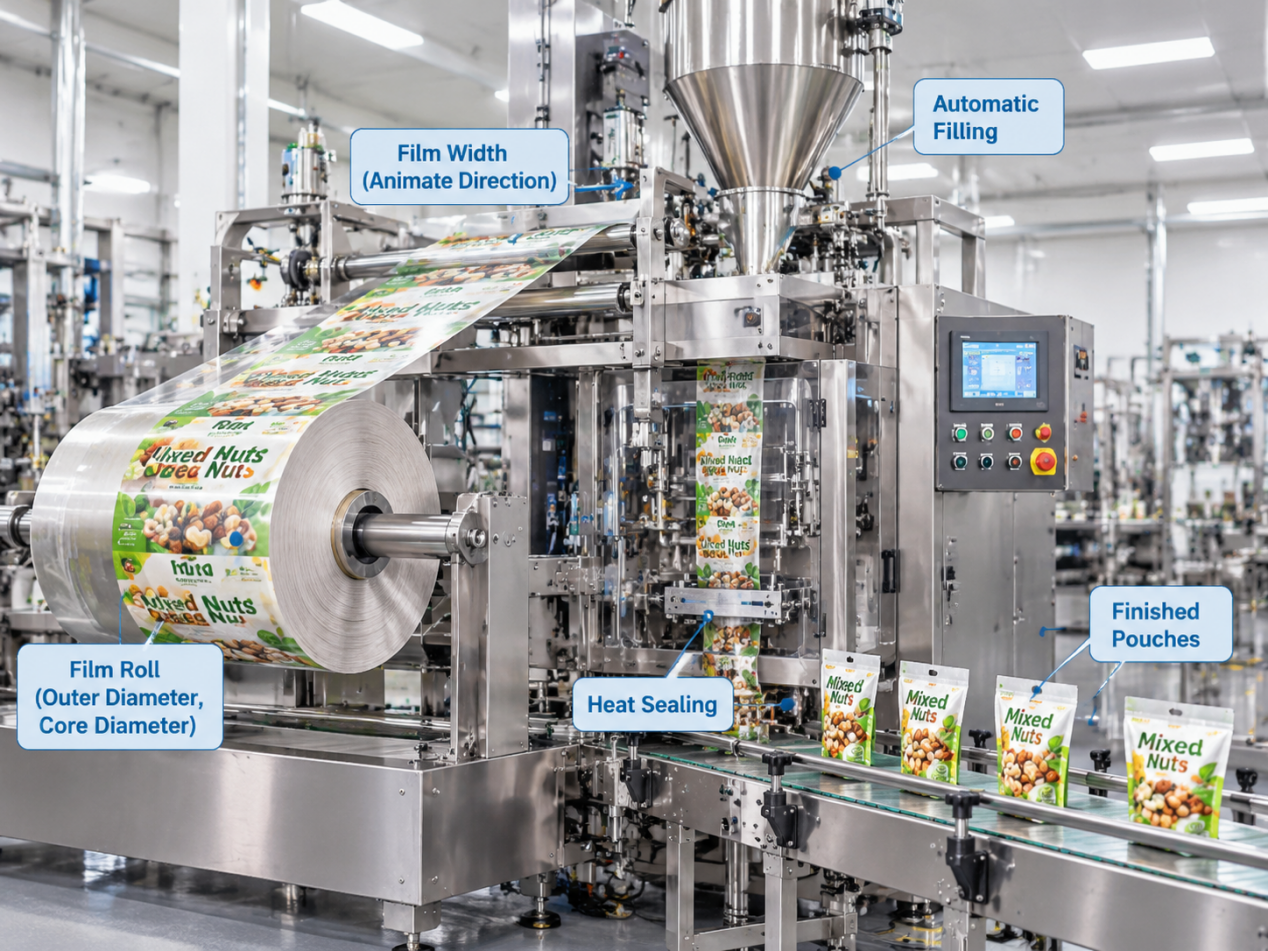
For rollstock film, the RFQ should include more technical information:
-Machine brand and model
-Machine type (VFFS or HFFS), film width and maximum roll diameter
-Core size
-Film feeding and unwinding direction
-Unwind direction, print orientation and sealant side
-Sealing temperature and machine speed, if available
-Printing position and repeat length
Where available, include the coefficient of friction (COF), sealing dwell time and pressure, and acceptable registration tolerance. A machine trial may be needed before mass production.
If the buyer is replacing existing rollstock film, providing the current film specifications and machine information can help the supplier identify potential compatibility issues before preparing a quotation.
9. Testing and Quality Requirements
Buyers should identify the tests and quality standards that the finished packaging must meet.
Depending on the product and application, requirements may include:
-Thickness measurement
-Tensile strength testing
-Puncture resistance testing
-Heat-seal strength testing
-Leak testing
-Drop testing
-Barrier performance testing
-Appearance and printing inspection
For food-contact packaging, identify the destination market, food type and intended contact conditions. Request applicable declarations and migration test documentation for the proposed structure, rather than assuming a general factory certificate covers every product.
It is important to distinguish between tests required for every production order and tests required only during initial product development or qualification.
Attach acceptance criteria, test methods and sampling requirements where available, including target seal strength or leak-test conditions.
Clear testing requirements help both parties understand how packaging quality will be evaluated before shipment.
10. Delivery Conditions and Shipping Information
Delivery requirements should be included in the RFQ because they can affect production planning, packing arrangements, shipping costs, and delivery schedules.
Buyers should specify:
-Delivery destination
-Required delivery date or target lead time
-Shipping method, if known
-Incoterms rule and named port or place, such as FOB or CIF where appropriate
-Packaging and palletization requirements
-Labeling and carton-marking requirements
-Whether split shipments are acceptable
If the order is time-sensitive, buyers should communicate the required arrival date and any important production deadlines.
Ask suppliers to separate unit price, tooling, testing and freight charges, and state quotation validity and lead-time assumptions.
Providing these details allows suppliers to prepare a more complete quotation and avoid misunderstandings after the order is confirmed.
11. Customer Case: Aligning Specifications Before Quotation
In the food manufacturing project described here, a customer approached HUIYANG PACKAGING for customized packaging across its product range, with both product protection and filling-line compatibility to consider.
Our team reviewed the product application, pouch format, dimensions, laminate structure, thickness, artwork and expected quantities together, rather than treating pouch size as the sole pricing input.
The review also covered filling equipment, sealing requirements, quality expectations and delivery arrangements. These factors matter because a change in laminate or sealant can affect both material cost and machine compatibility.
The documented outcome was a clearer review of the specifications and identification of items requiring confirmation before the quotation was finalized.
The purchasing lesson is to separate confirmed specifications from open technical questions. Ask each supplier to quote against the same requirements and identify any proposed alternatives separately.
12. A Practical Flexible Packaging RFQ Checklist
Before sending an RFQ to a packaging supplier, buyers can use the following checklist to confirm that the essential information is ready.
| RFQ Item | Information to Prepare |
| Product application | Product type, weight, storage conditions |
| Pouch style | Stand-up pouch, flat bottom bag, rollstock film, etc. |
| Dimensions | Width, height, gusset, roll dimensions |
| Material | Laminate, barrier targets, contact conditions |
| Thickness | Total thickness and performance requirements |
| Printing | Artwork, colors, printing method, finishes |
| Quantity | Pieces or kg per SKU, annual demand, repeat orders |
| Equipment | Machine type, model, unwind direction, sealing conditions |
| Testing | Test methods, acceptance limits, market compliance |
| Delivery | Named destination, arrival date, Incoterms, freight scope |
If some specifications are not yet available, buyers can still send the information they have and ask the supplier to help evaluate the remaining requirements.
Mark each specification as confirmed, preferred or open to recommendation. This allows suppliers to distinguish mandatory requirements from areas where they can propose alternatives.
Conclusion: A Complete RFQ Leads to a Better Packaging Solution
A useful RFQ is a common specification for technical review and commercial comparison, not simply a request for the lowest price.
HUIYANG PACKAGING provides customized flexible packaging solutions, including stand-up pouches, zipper pouches, flat bottom bags, quad seal bags, spout pouches, and custom printed packaging film for food and other product applications.
We work with food manufacturers, brands and packaging distributors developing custom printed pouches and rollstock for commercial production and repeat orders.
Request a custom flexible packaging quotation from HUIYANG PACKAGING. Send your product application, bag or film specifications, artwork, quantity per SKU, filling method and target delivery destination. If you are planning a product launch or switching suppliers, include your estimated annual demand and current packaging sample or specification, if available.
Frequently Asked Questions
1. What does RFQ mean in flexible packaging?
RFQ stands for Request for Quotation. It is a document or inquiry that buyers send to suppliers to request pricing and production information for customized packaging. It normally includes product details, pouch specifications, materials, thickness, printing, quantity, and delivery requirements.
2. Can I request a custom packaging quotation without knowing the material structure?
Yes. Buyers do not need to know every technical specification before contacting a supplier. You can provide the product type, weight, shelf-life requirements, and intended packaging application. The supplier can then recommend suitable material structures and thickness options for review.
3. Why do suppliers need product weight and packaging dimensions?
Product weight and dimensions help suppliers evaluate pouch capacity, material strength, sealing requirements, and production feasibility. Without this information, quotations may be based on assumptions and may not reflect the actual packaging requirements.
4. Should I provide artwork when requesting a quotation?
If the design is available, providing artwork is helpful. It allows the supplier to review printing colors, design layout, printing area, and production requirements. If the artwork is not finalized, buyers can provide a reference design and confirm the final files later.
5. How can I compare flexible packaging quotations from different suppliers?
Compare the same laminate structure, thickness, dimensions, features, quantity per SKU, testing requirements and delivery terms. Check whether printing cylinders, freight and other one-time charges are included before comparing unit prices.
6. What is the minimum order quantity for custom flexible packaging?
MOQ depends on the pouch style, dimensions, material structure, thickness and printing requirements. For rollstock film, HUIYANG PACKAGING generally requires at least 500 kg, subject to specification review. Share the quantity per design and your planned repeat orders for a project-specific assessment.
Post time: Nov-28-2026