


Frozen meat and poultry products require packaging that can withstand low temperatures, protect against moisture loss, and maintain reliable sealing performance throughout storage and distribution.
For meat processors, poultry manufacturers, and frozen food brands, choosing the wrong packaging material can lead to punctures, seal failures, freezer burn, and product quality complaints.
However, selecting suitable frozen meat packaging involves more than choosing a thick plastic bag. Material structure, puncture resistance, oxygen barrier, sealing performance, and compatibility with packaging equipment must all be considered.
This guide explains how to select flexible packaging for frozen meat and poultry products, including practical solutions to common packaging problems.
1. Understand the Main Challenges of Frozen Meat Packaging
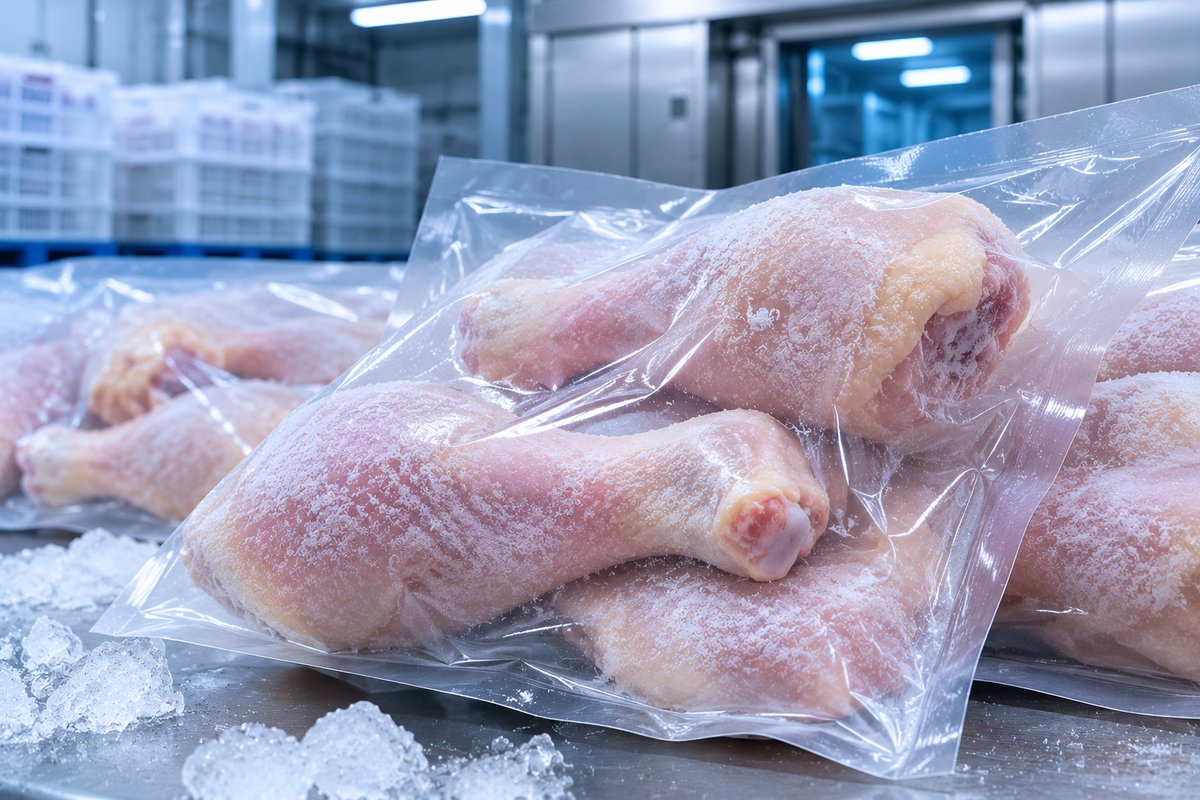
Frozen meat packaging faces different challenges from packaging for dry foods or products stored at room temperature.
The most common risks include:
Freezer burn: Moisture loss and exposure to air can cause surface dehydration and discoloration.
Puncture damage: Frozen bones and sharp meat edges may damage packaging during handling.
Seal failure: Meat juices, grease, or ice contamination can interfere with heat sealing.
Cold-temperature brittleness: Unsuitable materials may crack or lose flexibility at freezing temperatures.
Transportation damage: Compression, vibration, and repeated handling may weaken packaging.
These problems become particularly important for products distributed through long-distance cold chains.
For commercial frozen poultry packaging, manufacturers should evaluate packaging performance under actual freezing, storage, and transportation conditions rather than relying only on material thickness.
2. Choose the Right Material Structure
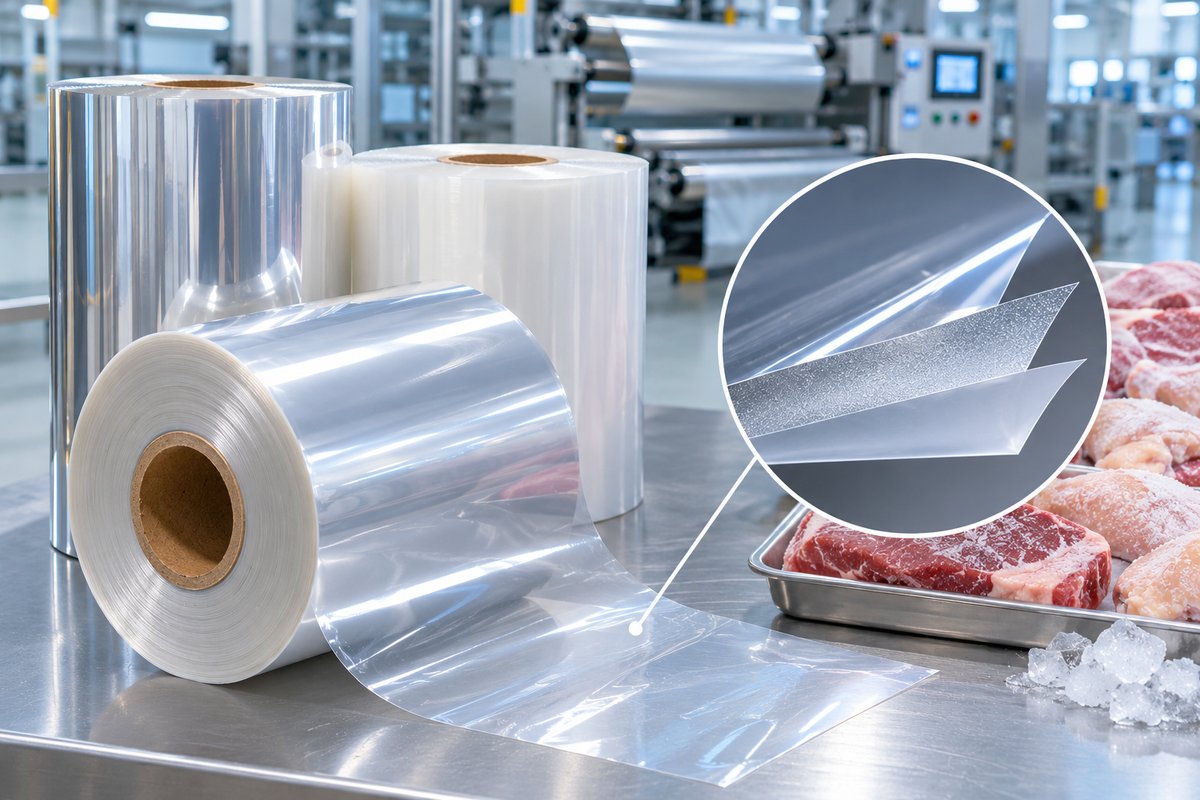
Material selection directly affects the strength, barrier performance, flexibility, and cost of frozen food packaging bags.
Different frozen meat products require different laminated structures.
PET/NY/PE – For Puncture Resistance
PET/NY/PE is a commonly considered structure for frozen meat packaging.
PET provides printability and dimensional stability, while nylon (NY/PA) contributes puncture resistance and mechanical strength. PE serves as the heat-sealing layer.
This structure may be suitable for frozen chicken portions, beef cuts, pork, and other products requiring additional mechanical protection.
PET/PE – For Selected Frozen Food Applications
PET/PE can be considered for frozen products with relatively low puncture risks and less demanding barrier requirements.
Its suitability depends on film thickness, product shape, storage duration, and sealing conditions.
It should not automatically be selected for bone-in poultry or long-term storage without performance testing.
PET/AL/PE – For High-Barrier Applications
PET/AL/PE provides strong oxygen, moisture, and light barrier properties when the laminate remains intact.
It may be considered for certain frozen meat products requiring enhanced protection.
However, aluminum foil structures can be vulnerable to flex cracking or damage under demanding handling conditions. They are not automatically the best choice for sharp, bone-in products.
The best material structure should be determined by product characteristics and verified through application-specific testing.
3. Prioritize Puncture Resistance and Low-Temperature Durability
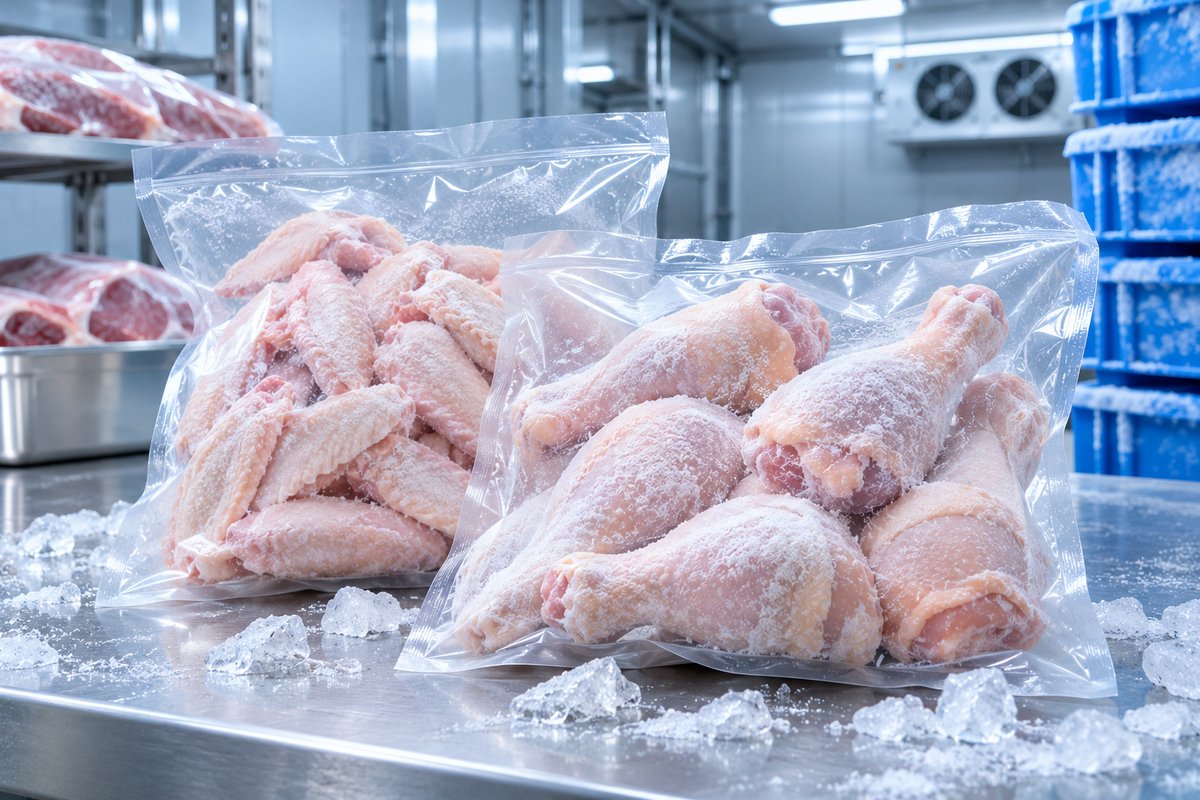
Puncture resistance is particularly important when packaging frozen chicken wings, drumsticks, bone-in pork, or irregular meat cuts.
Sharp bones and hard frozen edges may create concentrated pressure against the packaging film.
If the material lacks sufficient toughness, small punctures may develop during filling, freezing, or transportation.
Nylon-containing laminates are often considered for applications requiring improved puncture resistance.
However, increasing film thickness alone does not guarantee better performance.
Manufacturers should evaluate puncture resistance, tear strength, flexibility, and sealing performance together.
For puncture resistant packaging film, testing should reflect the actual product shape, filling weight, freezing temperature, and distribution conditions.
4. Prevent Freezer Burn with Suitable Barrier Properties
Freezer burn occurs when frozen meat loses moisture from its surface. Air exposure can also contribute to oxidation and quality deterioration.
Although freezer burn does not automatically make food unsafe, it can negatively affect appearance, texture, and flavor.
According to USDA food safety guidance, tightly wrapping frozen foods and reducing air exposure help protect against freezer burn.
问答中心+1
For commercial frozen meat packaging, two properties deserve particular attention:
Moisture barrier: Helps reduce moisture loss during frozen storage.
Oxygen barrier: Helps limit oxidation, particularly for products containing fat.
Vacuum packaging for frozen meat can further reduce the amount of air surrounding the product when used with suitable packaging materials and equipment.
For products requiring extended frozen storage, manufacturers should evaluate oxygen transmission rate (OTR), water vapor transmission rate (WVTR), and package integrity.
High barrier packaging for frozen food should be selected according to the required shelf life rather than material appearance alone.
5. Ensure Reliable Heat Sealing
Even a strong laminated film may fail if the sealing process is unsuitable.
Frozen meat packaging frequently encounters sealing challenges caused by moisture, meat juices, grease, or product contamination around the seal area.
Common consequences include leakage, weak seals, and package opening during transportation.
To reduce these risks, manufacturers should consider:
Selecting an appropriate PE sealing layer.
Adjusting sealing temperature, pressure, and dwell time.
Keeping product residues away from the sealing area.
Verifying seal strength after freezing.
Checking compatibility with automatic packaging equipment.
For high-volume production, custom frozen meat packaging bags should be tested on the customer’s actual filling and sealing equipment before mass production.
6. Practical Industry Case: Frozen Chicken Packaging Punctures
A common problem in frozen poultry processing occurs when bone-in chicken portions are packed in films that do not provide sufficient puncture resistance.
During freezing and carton transportation, sharp bone ends or hard product edges may press against the packaging surface.
Small punctures can allow air to enter, increasing the risk of moisture loss and freezer burn.
Recommended solution:
First, review the product shape, bone exposure, filling weight, and handling conditions.
Next, evaluate a nylon-containing laminate such as PET/NY/PE and adjust the material thickness according to puncture testing.
The packaging team should also examine bag dimensions, carton arrangement, and pressure points during transportation.
Finally, conduct filled-package tests under representative freezing and handling conditions before approving production.
This example illustrates a recognized industry failure mechanism and a practical corrective approach. The final material specification must be validated for each product.
7. Select the Appropriate Packaging Format
Different frozen meat products require different packaging formats.
Three-side seal bags are suitable for portion-controlled meat products and selected vacuum packaging applications.
Stand-up pouches may be used for frozen processed meat, boneless poultry, and retail products requiring convenient shelf presentation.
Flat pouches are often practical for frozen meat portions and foodservice applications.
Rollstock film can support automated packaging lines, depending on machine specifications and sealing requirements.
When selecting custom printed frozen poultry bags, manufacturers should also consider bag dimensions, filling weight, printing requirements, and distribution channels.
The packaging format must match both the product and the production process.
8. Confirm Packaging Specifications Before Bulk Orders
Before ordering flexible packaging for frozen meat, buyers should provide their packaging supplier with essential technical information.
This includes:
Meat or poultry type, including whether bones are present.
Product weight and required bag dimensions.
Storage temperature and expected shelf life.
Vacuum or non-vacuum packaging requirements.
Filling and sealing equipment specifications.
Transportation conditions and estimated order quantity.
These details help the supplier recommend suitable material structures, thicknesses, and packaging formats.
For large-volume orders, sample evaluation and production trials can help identify potential packaging failures before full-scale manufacturing.
Conclusion: Choose Packaging Based on Actual Product Requirements
Choosing the right frozen meat packaging requires balancing puncture resistance, moisture protection, oxygen barrier performance, sealing reliability, and production efficiency.
No single material structure is suitable for every frozen meat or poultry application.
For meat processors and poultry manufacturers, the most effective approach is to evaluate packaging against actual product characteristics and cold-chain conditions.
At HUIYANG PACKAGING, we manufacture custom flexible packaging bags and rollstock films for food manufacturers, brands, and distributors.
We offer customized pouch formats, laminated material structures, thicknesses, and printing solutions based on application requirements.
Looking for a frozen meat packaging manufacturer for your next project?
Contact HUIYANG PACKAGING with your product type, bag dimensions, material requirements, and estimated order quantity. Our team can help evaluate suitable custom packaging options for your production needs.
Post time: Nov-23-2026