


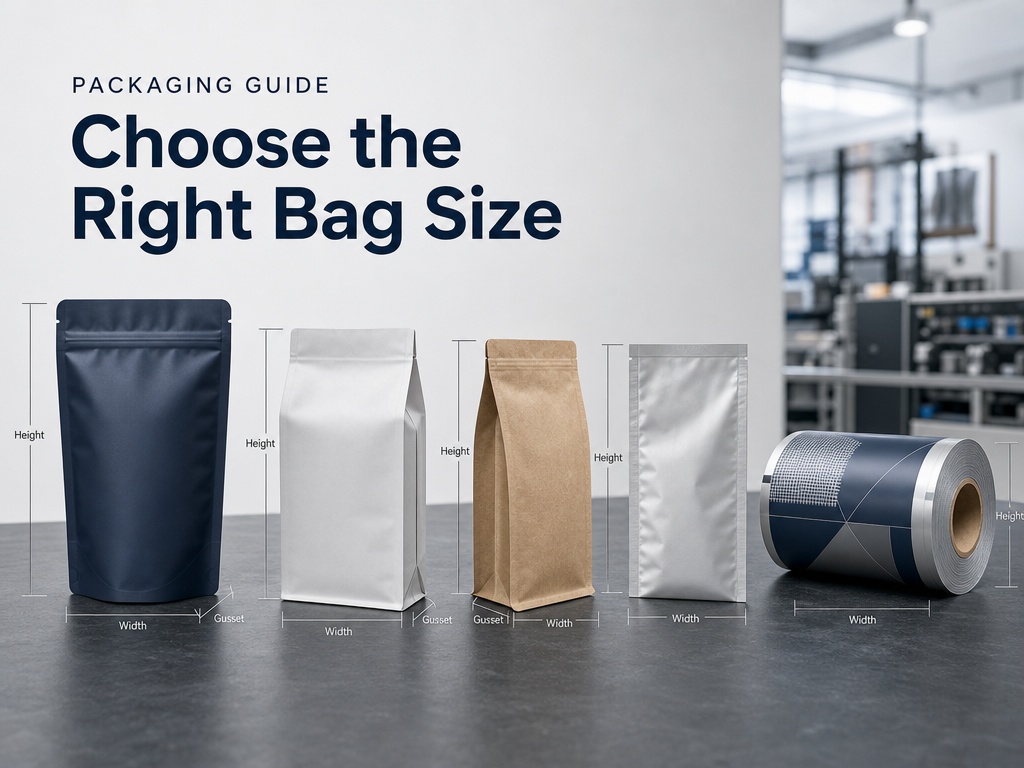
Choosing the right packaging bag size may seem simple: determine the product weight and select a bag that looks large enough. In practice, however, packaging bag size depends on much more than net weight.
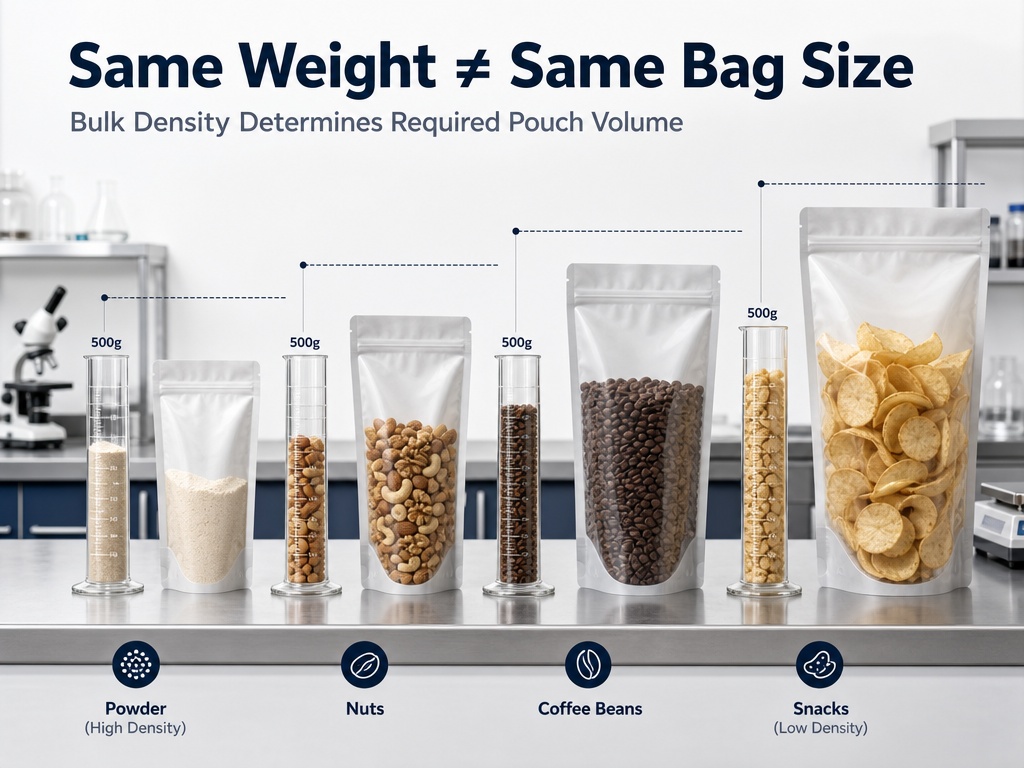
The same 250g of coffee beans, tea leaves, snacks, or powder can require very different pouch dimensions because each product has a different density, shape, settling behavior, and filling method. The pouch structure, gusset, zipper, sealing area, and required headspace also affect the usable capacity.
For brands and packaging buyers, choosing the correct custom packaging bag size before mass production can help avoid filling problems, poor shelf presentation, material waste, and costly packaging changes.
Here is a practical guide to choosing the right size for your product.
1. Start With Product Weight — But Don’t Stop There
The first information a packaging manufacturer usually needs is the target net weight or volume.
For example:
100g snack
250g coffee
500g nuts
1kg pet food
500ml or 1L liquid product
However, product weight alone cannot determine the correct pouch size.
Bulk density is one of the most important factors. A dense product can fit into a relatively compact package, while lightweight products with more air space may need a larger pouch for the same weight. Product shape also matters because irregular pieces can leave more empty space inside the package.
Therefore, instead of asking only:
“What size bag do I need for 250g?”
a better starting point is:
What product is being packed, how much does it weigh, how much volume does it occupy, and how will it be filled?
2. Understand the Three Main Packaging Bag Dimensions
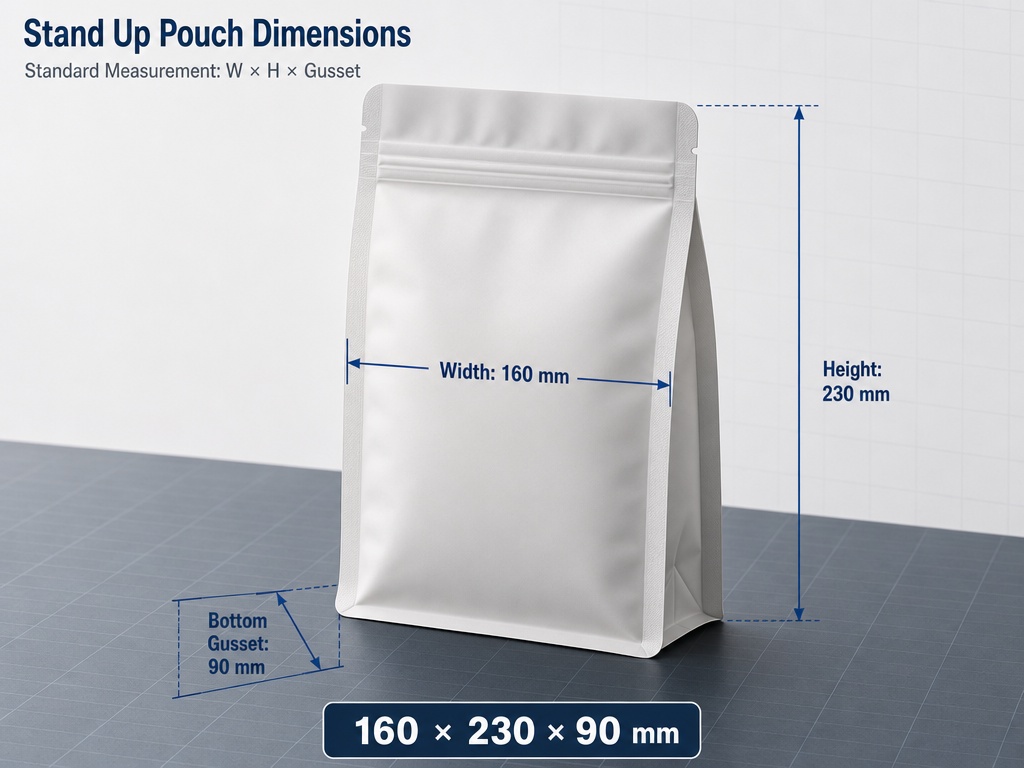
For many flexible packaging products, dimensions are described using:
Width × Height × Gusset
For example:
160 × 230 × 90 mm
This generally means approximately:
160 mm — pouch width
230 mm — pouch height
90 mm — bottom gusset depth
The gusset is especially important for stand-up pouches because it expands when the bag is filled and creates the bottom structure that allows the pouch to stand.
Two bags with the same width and height can have different capacities if their gusset depths are different.
For products that need strong shelf presentation, the gusset also affects the filled shape and stability.
3. Don’t Calculate Capacity From the Empty Bag Alone
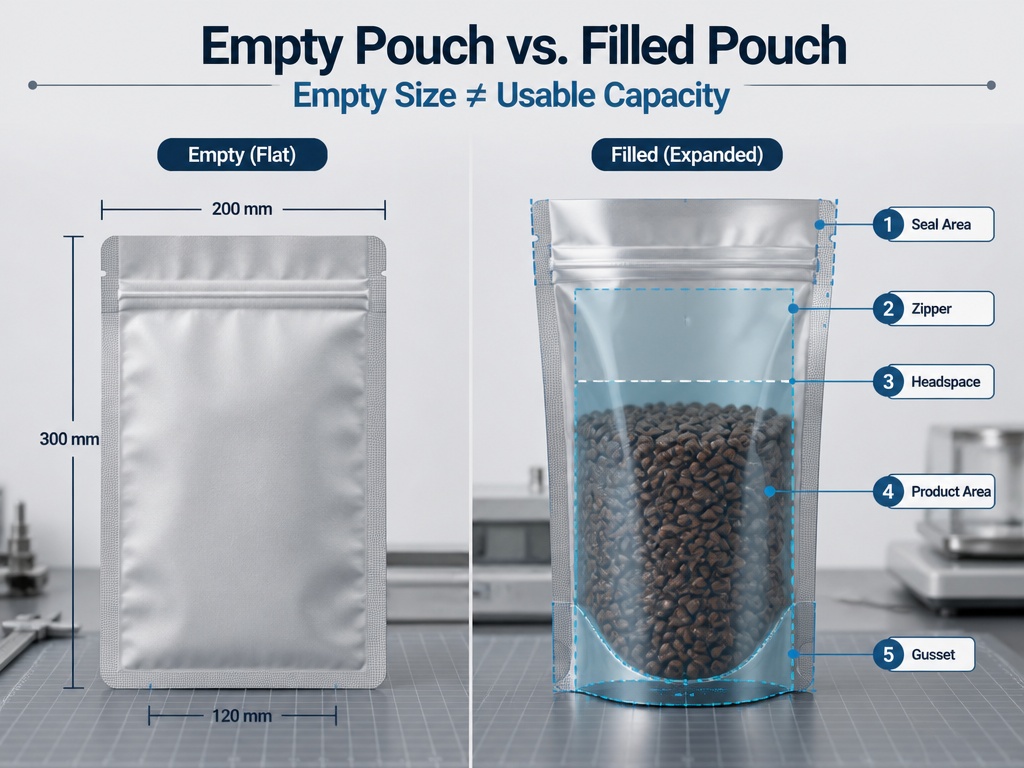
One of the most common packaging size mistakes is assuming that the outside dimensions of an empty pouch represent its actual usable capacity.
They do not.
Part of the pouch is occupied by:
Top sealing area
Bottom or side seals
Zipper
Tear notch
Spout or other fitments
Valve
Gusset structure
Required headspace
Therefore, a pouch measuring 160 × 230 × 90 mm does not mean that the entire geometric volume is available for product.
The actual filling area starts below functional components such as the zipper and needs enough space for the product to enter without contaminating the closure or heat-seal area.
This is why usable capacity is more important than theoretical capacity.
4. Consider the Product’s Density and Shape
Different products behave differently during filling.
Coffee Beans
Coffee beans have irregular shapes and naturally contain air gaps between individual beans. A 250g coffee pouch therefore needs enough internal volume to accommodate the beans without making the package excessively full.
Powder
Powders can settle significantly during transportation or vibration. A pouch that looks correctly filled immediately after packing may have additional headspace after the product settles.
Nuts and Snacks
Nuts, chips, biscuits, and other irregular products can require more volume than their weight alone suggests.
Pet Food
Pet food is often packed according to weight, but kibble size, density, and shape can affect the final pouch dimensions.
This is why a generic “500g pouch size” chart should only be used as a starting reference. The final custom pouch dimensions should be confirmed with the actual product whenever possible.
5. Choose the Bag Structure Before Finalizing the Size
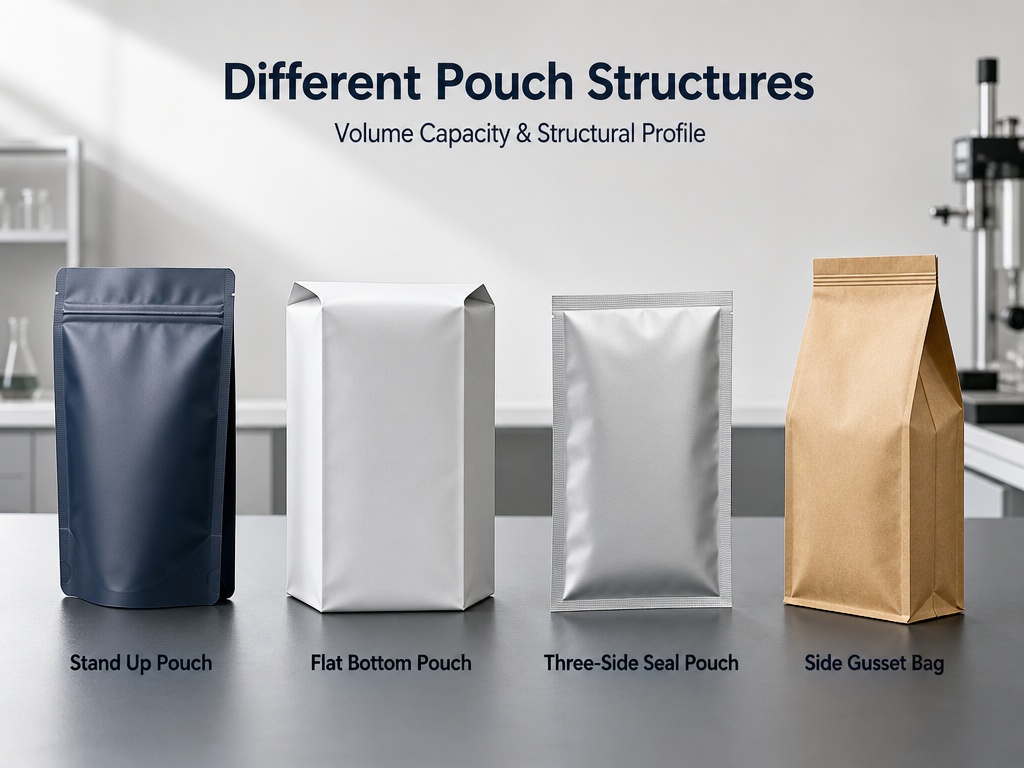
The right size also depends on the type of packaging bag.
Stand Up Pouch
A stand-up pouch uses a bottom gusset to create a stable base. It is commonly used for:
Snacks
Candy
Nuts
Dried fruit
Coffee
Pet food
powder products
The width, height, and gusset need to work together to achieve both capacity and shelf stability.
Flat Bottom Pouch
A flat bottom pouch, also known as an 8-side seal pouch, provides multiple panels and a structured base. It is often selected for coffee, pet food, snacks, and other products requiring a larger three-dimensional package.
Three-Side Seal Pouch
This structure is relatively flat and is suitable for products that do not require the same stand-up presentation as a gusseted pouch.
Side Gusset Bag
Side gusset bags provide additional volume through the side folds and are often used for coffee, grains, and larger-volume products.
The bag style should therefore be selected together with the target capacity rather than choosing the dimensions first.
6. Leave Enough Headspace for Filling and Sealing
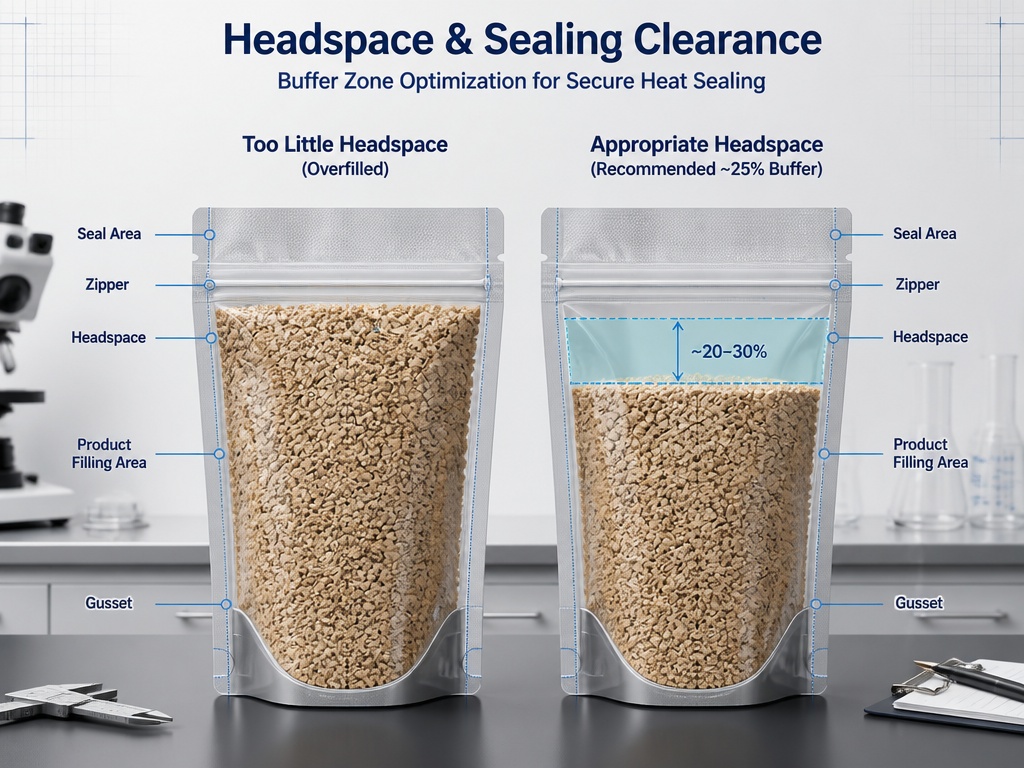
Headspace is the empty area between the product and the top closure or seal.
It has an important function.
Too little headspace can cause:
Product entering the zipper
Contaminated heat-seal areas
Difficulty closing the pouch
Inconsistent filling
Excessive pressure on the package
Too much headspace can make the package look underfilled and may reduce packaging efficiency.
The correct amount depends on the product and filling process. Powder, irregular snacks, coffee beans, and liquid products may require different approaches.
For automated packaging, the filling equipment should also be considered because the pouch needs enough opening and clearance for smooth filling and sealing.
7. Real Customer Case: 250g Coffee Packaging
A previous HUIYANG PACKAGING customer needed a custom coffee pouch for approximately 250g of coffee.
The project used a pouch size of:
160 × 230 × 90 mm
The packaging specification included a high-barrier MPET structure, zipper closure, and coffee valve. The size was selected around the actual coffee filling requirement rather than simply choosing a generic “250g bag.”
The customer also needed several printed designs, so the pouch dimensions had to work for both the product volume and the visual presentation of the artwork.
This case shows why custom coffee packaging bags should be developed around the actual product, filling requirements, closure features, and final shelf appearance.
A 250g package is not automatically one fixed size. Coffee bean density, roasting style, pouch structure, valve position, zipper placement, and required headspace can all affect the final specification.
8. Test the Size With the Real Product
Before approving final production dimensions, a physical test is strongly recommended.
A practical process is:
Step 1: Confirm the target weight or volume.
Step 2: Measure the actual product volume or bulk density when possible.
Step 3: Select a suitable pouch structure.
Step 4: Estimate the preliminary width, height, and gusset.
Step 5: Make or obtain a physical sample.
Step 6: Fill the sample with the actual product.
Step 7: Check the filled height, shape, stability, closure, and sealing area.
Step 8: Test the pouch with the intended filling equipment if applicable.
Step 9: Confirm the final dimensions before releasing the production artwork.
A sample filled with the actual product provides much more useful information than evaluating an empty pouch. Industry packaging guides similarly recommend physical fill trials before finalizing production dimensions.
9. Common Packaging Bag Sizing Mistakes
Mistake 1: Choosing a Bag Based Only on Weight
“500g” does not automatically correspond to one universal pouch size.
Mistake 2: Ignoring the Gusset
A deeper or shallower gusset can significantly change the pouch’s capacity, shape, and stability.
Mistake 3: Filling Too Close to the Zipper
This can interfere with closure and sealing.
Mistake 4: Approving the Empty Pouch
An empty pouch cannot show the final filled shape or shelf stability.
Mistake 5: Finalizing Artwork Too Early
Changing the pouch dimensions later may affect the zipper position, tear notch, artwork layout, folds, and other design elements.
10. Packaging Bag Size Checklist for Buyers
Before asking a flexible packaging manufacturer for a quotation, prepare the following information:
Product name
Target net weight or volume
Product density or approximate volume
Product shape and size
Preferred bag style
Width and height, if already known
Gusset requirement
Zipper, valve, spout, or other features
Filling method
Expected quantity
Artwork requirements
Required barrier performance
Target shelf presentation
The more complete this information is, the easier it is for a custom flexible packaging manufacturer to evaluate the suitable pouch dimensions.
Final Thoughts
Choosing the right packaging bag size is not simply about finding a bag that can hold the required weight. The correct dimensions should balance product volume, density, pouch structure, gusset, headspace, filling equipment, closure features, shelf presentation, and distribution requirements.
A packaging size chart can provide a useful starting point, but the most reliable method is to test the actual product in a physical pouch before mass production.
At HUIYANG PACKAGING, we manufacture custom flexible packaging bags and roll films based on the product, bag style, dimensions, material, thickness, and functional requirements.
If you are unsure about the right custom pouch size for your product, provide the product type, target weight or volume, preferred bag style, and approximate dimensions. These details can be used as the starting point for developing the final packaging specification.
Post time: Sep-24-2026