


Seal issues are something we see again and again in snack food packaging, especially with products like dried fruits and mixed nuts. On paper, many pouch structures look fine. In real production, that’s often not the case.
This project came from a U.S. snack brand selling through regional grocery stores and online channels. They reached out while reviewing their packaging setup, mainly because of repeated complaints related to freshness. The feedback was inconsistent, which made the issue harder to track.
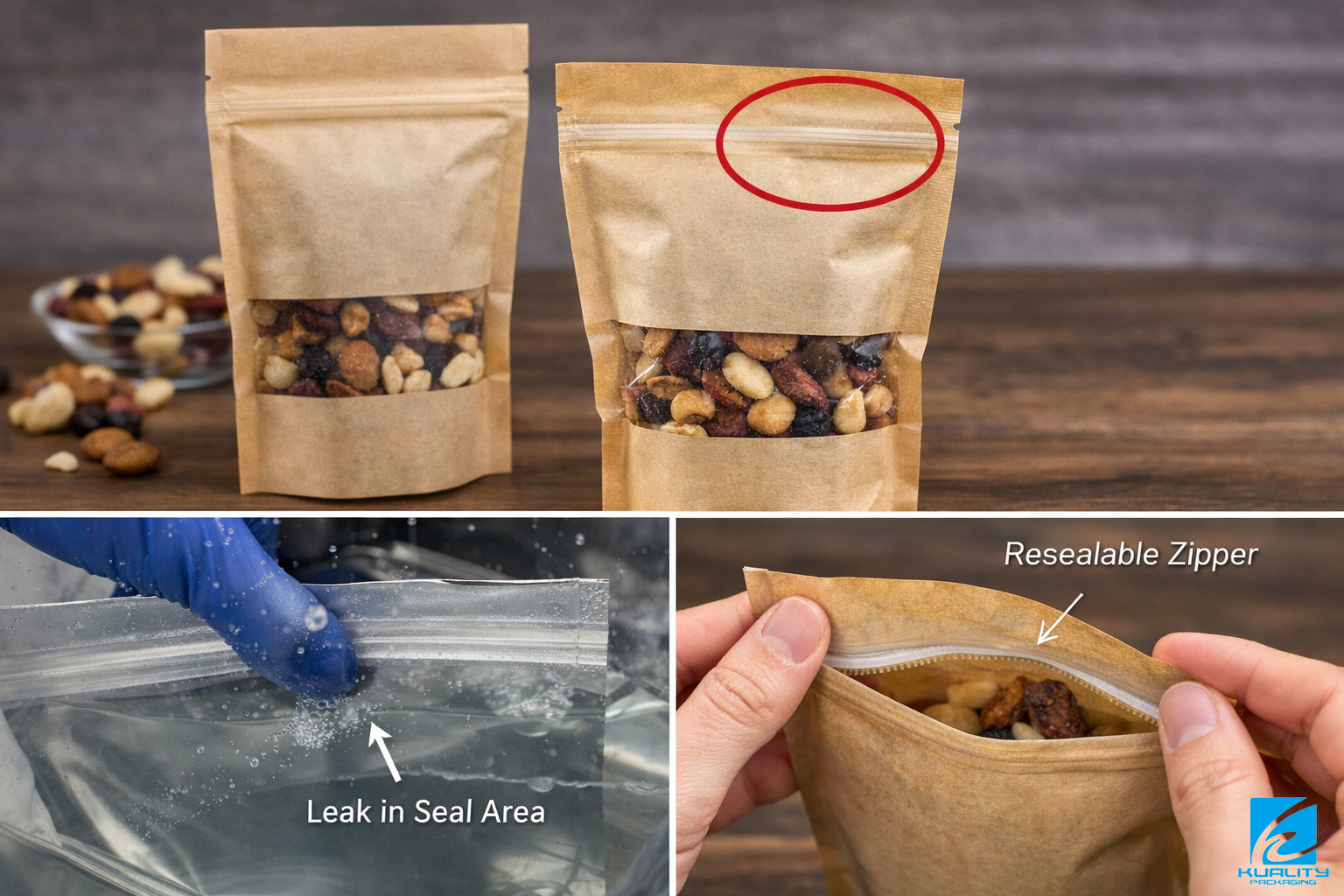
When we first looked at the existing pouches, nothing stood out immediately. There were no obvious open seals. Some samples passed basic checks. Others didn’t. Once we compared multiple batches side by side, the pattern became clearer. Seal strength wasn’t consistent. Some bags held up during transport. Others developed small leaks after normal handling.
An early suggestion was to increase material thickness. That discussion didn’t last long. Cost targets were tight, and all materials had to meet FDA food contact requirements. Options were limited, and adding thickness would have created new problems without guaranteeing a stable result.
Instead of changing the structure completely, we focused on how the existing PET/PE laminate behaved during sealing. The goal wasn’t to chase maximum seal strength. It was to make the seal perform the same way, every time. We reviewed the seal area design and adjusted how thickness was distributed across layers.
This took more than one round of sampling. The first revision showed improvement, but leakage tests still failed occasionally. Based on results that matched the client’s actual filling conditions, sealing parameters were adjusted again. Small changes made a noticeable difference.
The client also wanted to add a resealable zipper. Changing pouch dimensions wasn’t an option, since the filling line was already set up. We selected a zipper that could be integrated without modifying the pouch size and paid close attention to how it interacted with the top seal.
After the updated packaging went into production, complaints related to seal failure dropped significantly. Costs stayed within the original range. Over time, the same structure was rolled out across additional SKUs and became the client’s standard format.
Projects like this are a reminder that seal problems are rarely solved by switching materials alone. Most of the time, the real work is understanding how structure, sealing conditions, and production limits affect each other — and adjusting within those constraints.
Post time: Feb-01-2026