


Coffee packaging is more than just barrier performance. Many projects fail not because oxygen or moisture barrier is too low, but because the packaging doesn’t work reliably with the filling line or retail requirements.
This project came from a specialty coffee roaster in Australia supplying premium retail coffee beans. Their original packaging met oxygen and moisture barrier specifications, but shelf life varied between batches, and filling speed occasionally caused pouches to deform. The client didn’t want to change their filling line, which limited our options.
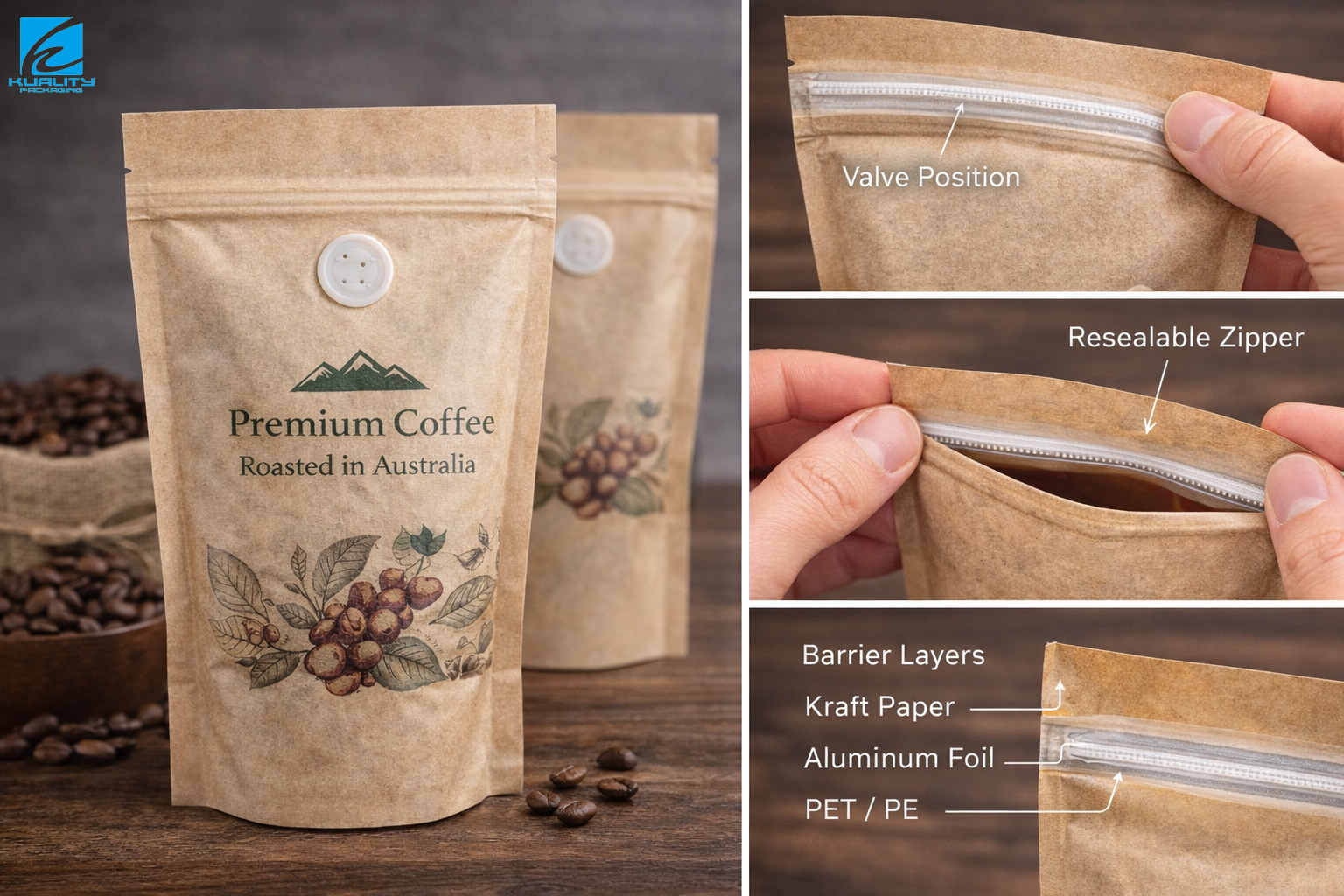
We recommended a kraft paper / aluminum / PE laminated pouch. The material combination provided the required barrier and supported the natural, premium look preferred by the brand.
Early sampling revealed instability around the degassing valve. At higher filling speeds, some pouches deformed slightly near the valve, while others filled normally. Reducing the filling speed was considered but rejected by the client because it would slow down production.
We focused on small, targeted adjustments. Valve position and local stiffness around the valve were fine-tuned. The first revised version improved stability but was still not perfect. Only after several more rounds of sampling did the filling process become consistently reliable.
Printing was another challenge. Kraft paper is less forgiving than plastic films, so early batches showed color variation. Minor adjustments to printing parameters improved consistency, balancing visual appearance with production practicality.
After launch, the client reported better aroma retention and more consistent shelf life. Retail feedback was positive, and the solution became the baseline for future coffee products. The project highlighted that packaging success is rarely about materials alone—it’s about understanding how design, production, and logistics interact in real-world conditions.
Post time: Feb-01-2026